The Meeting
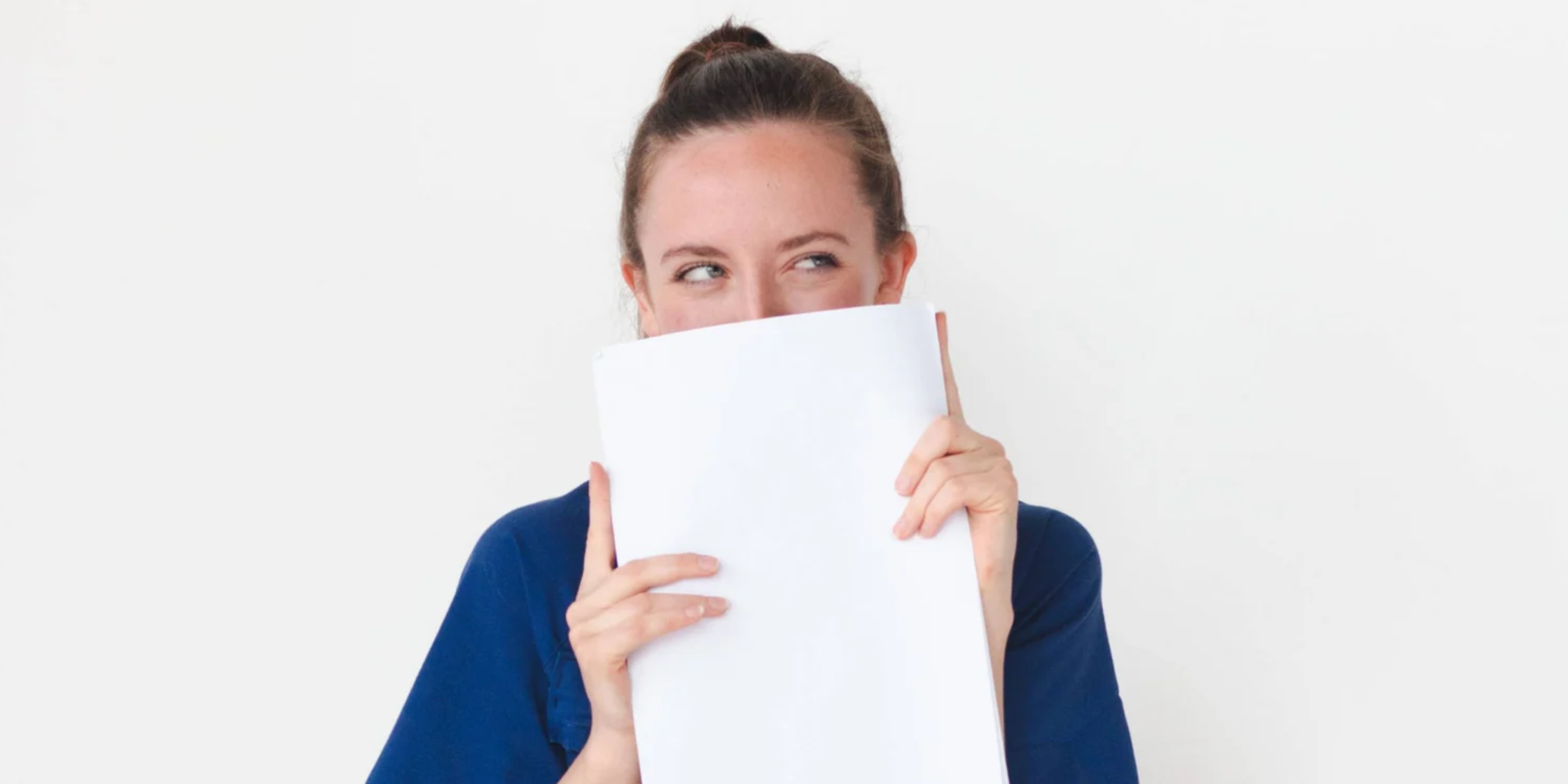
A top secret, future-defining meeting is about to take place. Everything falls on an overworked cleaner, three bumbling P.A.s, and a paranoid secret agent...What could go wrong?
The Meeting is a solo performance that thrives on chaos, character, and clowning. It is a political farce wrapped inside a basement full of cardboard boxes, driven entirely by the energy and imagination of performer‑creator Lola Houghton. The premise is simple enough to set the stage for mayhem. A high-stakes, future-defining meeting has been booked in the wrong room, leaving an overworked cleaner, three disorganised personal assistants, a jittery secret agent, a reporter, and an enthusiastic fanatic to hold everything together. The twist is that all seven characters are played by Houghton, who switches between them with remarkable speed.
The show began life in Hagley Theatre School’s creation course under the direction of Pedro Ilgenfritz, and that training shows. The performance leans heavily into clowning, satire, and archetypal exaggeration. It is a piece that understands the value of physical comedy, vocal transformation, and the kind of heightened behaviour that makes political satire feel both ridiculous and uncomfortably familiar.
Houghton’s performance is the engine of the production. She bursts onto the stage with a kind of restless energy that never really fades. Her character work is defined by sharp facial shifts, bold physical choices, and distinct vocal patterns. Each persona has its own rhythm, its own posture, its own way of occupying space. At her best, Houghton creates the illusion of multiple bodies onstage, even though she is alone. The agility of her transitions is impressive. One moment she is a frazzled assistant, the next a wide-eyed cleaner, the next a paranoid agent scanning the room for threats. The changes happen so quickly that the audience is often left laughing at the sheer audacity of the transformation.
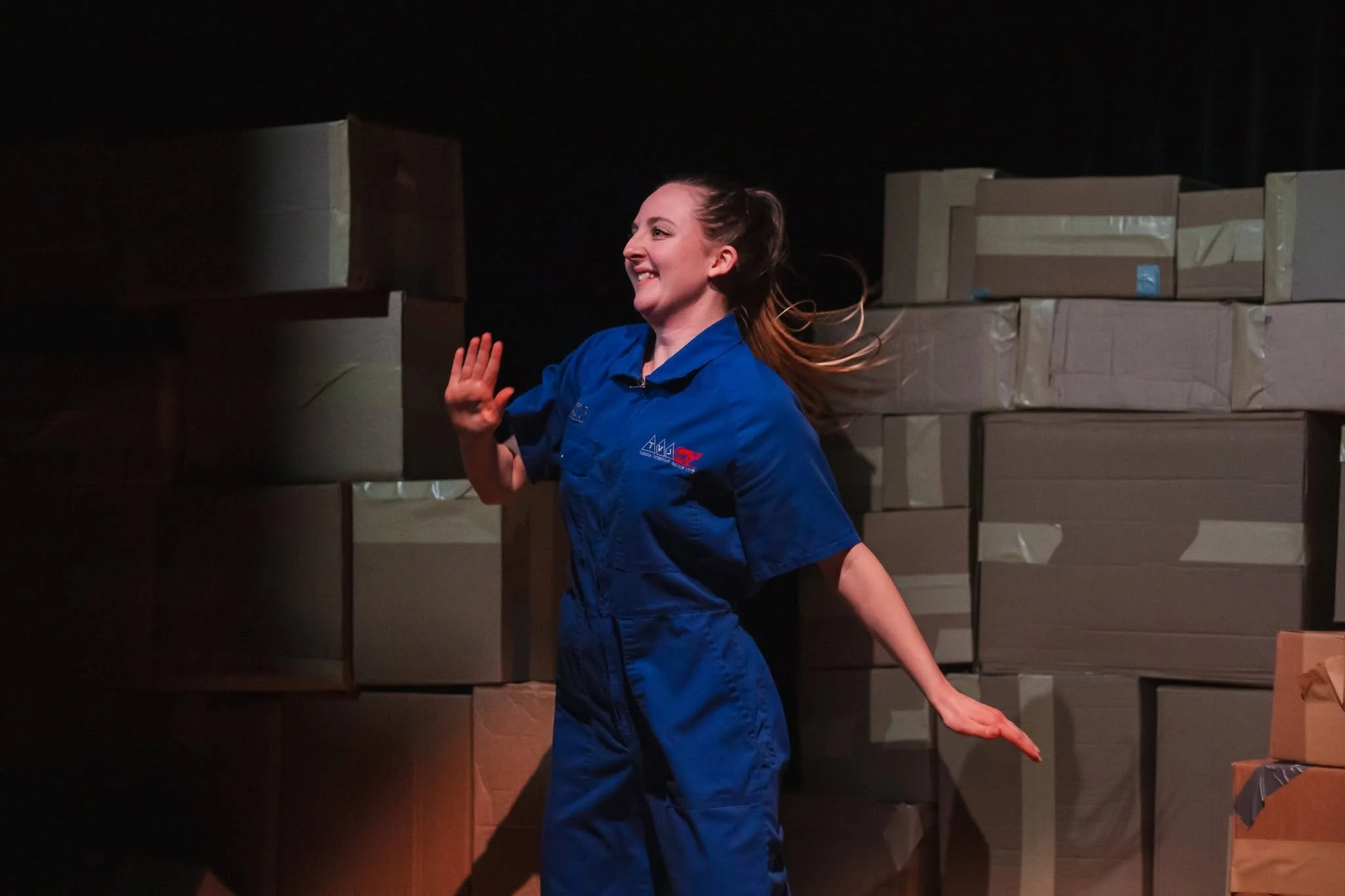
The set, designed by Houghton, is deceptively simple. Three walls of cardboard boxes create a basement storeroom that feels both cramped and playful. Boxes are stacked, shifted, and used as hiding places. They become doors, barriers, and visual cues for character changes. The design is clever in its minimalism, giving Houghton plenty of opportunities to disappear and reappear as someone new. At times, the boxes obscure sight lines, making it harder to see her face during rapid character switches. This occasionally affects clarity, especially when multiple characters share similar vocal qualities. Still, the boxes contribute to the show’s aesthetic and offer a tactile environment for physical comedy.
The first half of the performance is built around mystery. The audience is drip-fed information about the meeting, but nothing is confirmed. We do not know who the assistants work for, nor why the meeting is so important. This slow reveal suits the clowning style. The assistants bicker, panic, and attempt to clean the room while Houghton plays with pauses, ponytail flicks, and exaggerated reactions. The dialogue bounces back and forth, full of interruptions and frantic attempts to maintain order. It is chaotic, but intentionally so.
Toots, the cleaner, emerges as the most grounded character; the emotional anchor of the show, offering a contrast to the frantic energy of the assistants. Toots is easy to identify thanks to a distinct voice and physicality. Once they becomes the focal point, the narrative gains momentum. Their presence gives the audience someone to latch onto, someone whose perspective feels stable amid the absurdity.
The second half shifts tone. Once the nature of the meeting becomes clear, the show moves from surreal comedy into political satire. The shift is sharp but effective. What was once silly becomes pointed. The assistants, the agent, the reporter, and the fanatic all become vehicles for commentary. Houghton uses archetypes to highlight the absurdity of political systems, the incompetence of bureaucracy, and the way power is often held by people who have no idea what they are doing. The satire is broad, but it lands. The audience recognises the parallels without needing them spelt out.
The performance is supported by lighting and sound from Rae Longshaw Park, with original lighting design contributions from Gisele Proud and Ruby Comfort. The technical elements are subtle but essential. Shifts in lighting help delineate characters, moods, rooms and spaces. Sound cues add to the farcical atmosphere. The radio voice from Mary Davison adds another layer to the world, expanding the basement beyond its cardboard walls into the world of publicly shared media.
There are moments where the show could benefit from clearer spatial differentiation. The three assistants often cluster together, making it harder to distinguish them when Houghton switches rapidly between their voices. More defined physical zones or varied movement patterns could help clarify who is speaking. Similarly, some characters appear only briefly, making their purpose harder to grasp until the final reveal. This is intentional, but it does mean the audience spends time trying to work out who matters most.
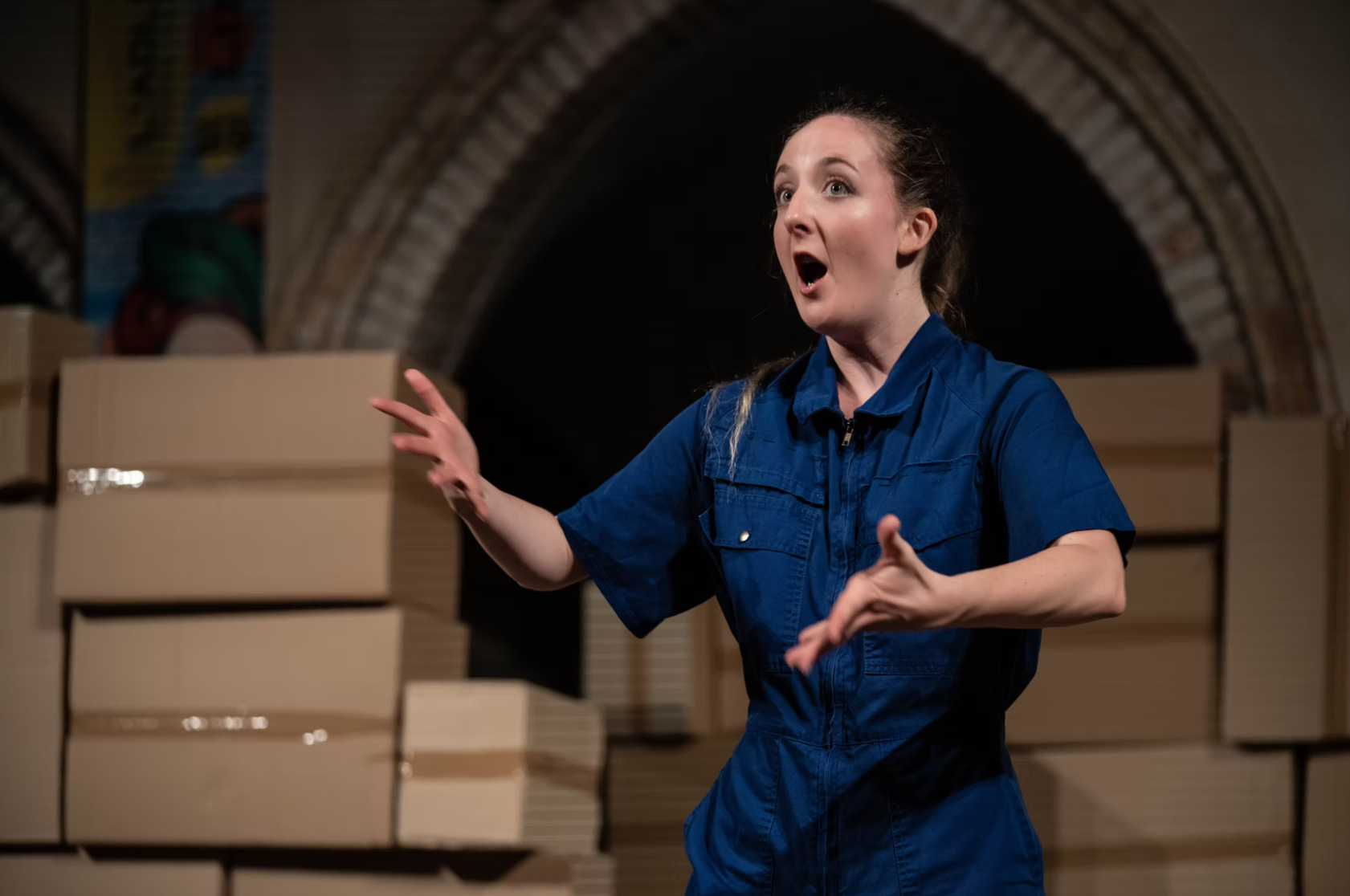
Despite these challenges, Houghton’s commitment to the performance is undeniable. She throws herself into every moment, whether she is sprinting across the stage, climbing through the audience, or holding an awkward silence until someone cracks. She embraces the unpredictability of live theatre. If something slips, she rolls with it. If the audience hesitates, she leans into the discomfort. Her confidence keeps the show afloat even when the structure wobbles.
The Meeting is a piece that relies heavily on performer energy, and Houghton delivers. Her character work is bold. Her physicality is expressive. Her comedic timing is sharp. The show is messy in places, but that messiness feels intentional, part of the clowning tradition that celebrates chaos as a tool for storytelling. The political satire is broad but effective, offering commentary without losing the humour.
The cardboard box set is charming, though it could be used more. The characters are distinct, though some could benefit from clearer physical markers. The pacing is playful, though the first half takes time to settle. But the strengths outweigh the weaknesses. The Meeting is a lively, inventive solo performance that showcases Houghton’s skill, stamina, and willingness to take risks.
It is a show that thrives on energy, embraces absurdity, and invites the audience to laugh at the ridiculousness of political systems. It is not polished in a traditional sense, but it is full of personality. It is a reminder that theatre can be messy, strange, and joyful, especially when one performer is willing to carry an entire world on their shoulders.
The Meeting was performed at Auckland’s Basement Theatre from 25-19 August.
Review written by Alex Moulton
