Bug Songs Not Love Songs
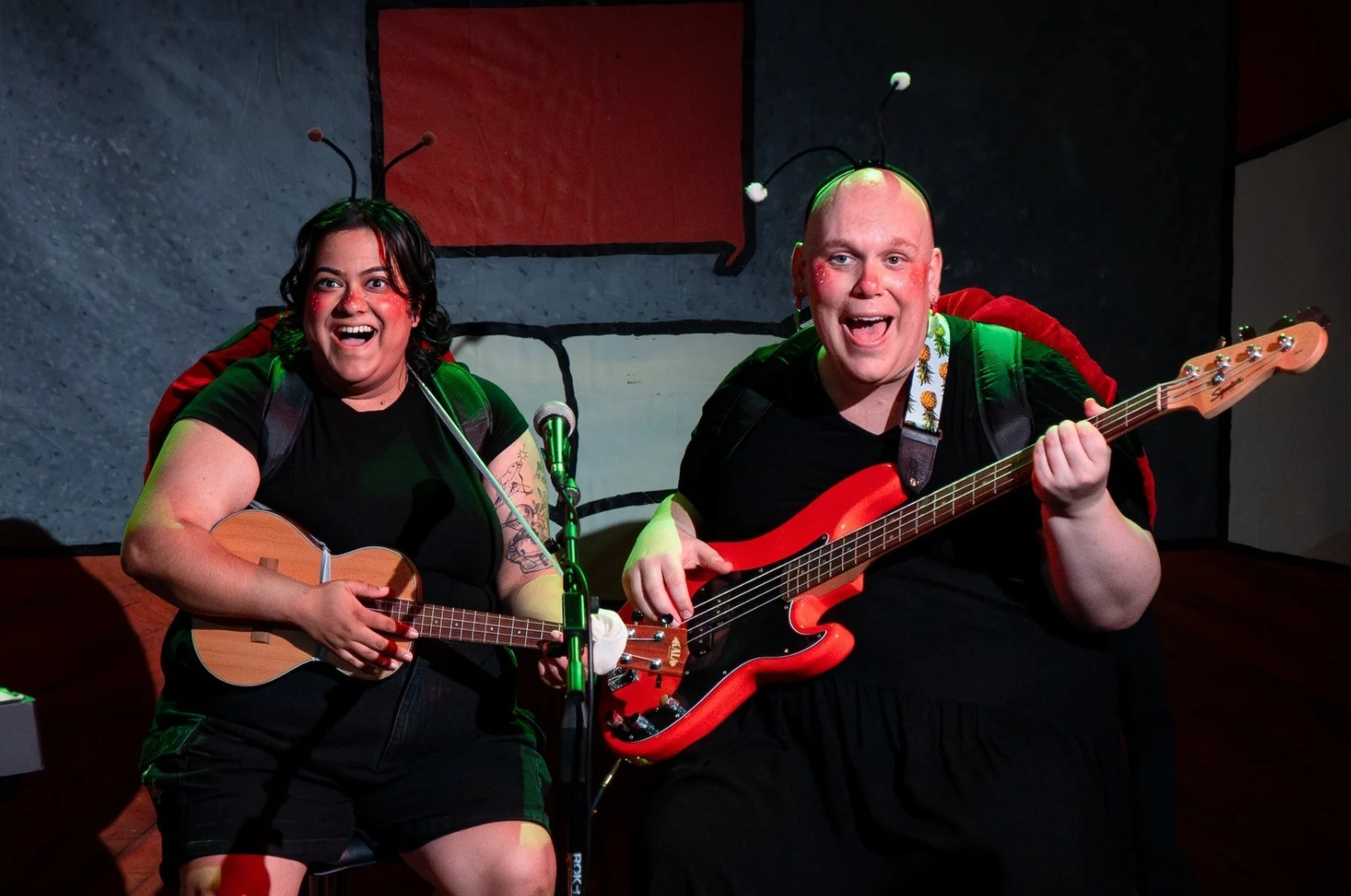
Ladybug celebrities, Bauble and Skump, normally play a weekly concert on Living Room Wall to all the bugs in House. However, this concert will tragically be their Last before House gets fumigated. Join Bugs On A Wall for a night of their greatest hits such as: Praying Mantis Wedding, Questions for Humans and Bugs Find A Way.
Bug Songs Not Love Songs is the kind of show that reminds you why small theatre spaces matter. It arrives with two performers, a handful of instruments, a wall of oversized props, and a premise that sounds whimsical enough to be a joke. Yet what unfolds is a surprisingly rich, joyful, and lovingly crafted musical comedy that transforms Basement Theatre into a tiny ecosystem full of personality, humour, and heart. It is a debut work from Bugs On A Wall, led by creators Phoebe Caldeiro and Lia Kelly, and it feels like the beginning of something genuinely exciting.
The premise is simple but charming. Two ladybug celebrities, Bauble and Skump, are preparing for their final concert on the Living Room Wall before the entire House is fumigated. This farewell performance becomes a celebration of their “greatest hits”, a reflection on their lives, and a chance to share their bug‑centric worldview with the audience. It is a concept that could easily lean into gimmick, but the team treats it with sincerity, humour, and an impressive amount of world-building.
From the moment the show begins, it is clear how much care has gone into the production. Basement Theatre often hosts minimalist work, but Bug Songs Not Love Songs arrives with a level of detail that feels far beyond what you expect from a two-person musical. The props are inventive. The costumes are colourful and characterful. The set design by Kate Anderson uses a large backdrop to create a playful sense of scale, reminding the audience that they are seeing the world from a bug’s perspective. Even the lighting, designed by Lia Kelly, adds texture and warmth to the space.
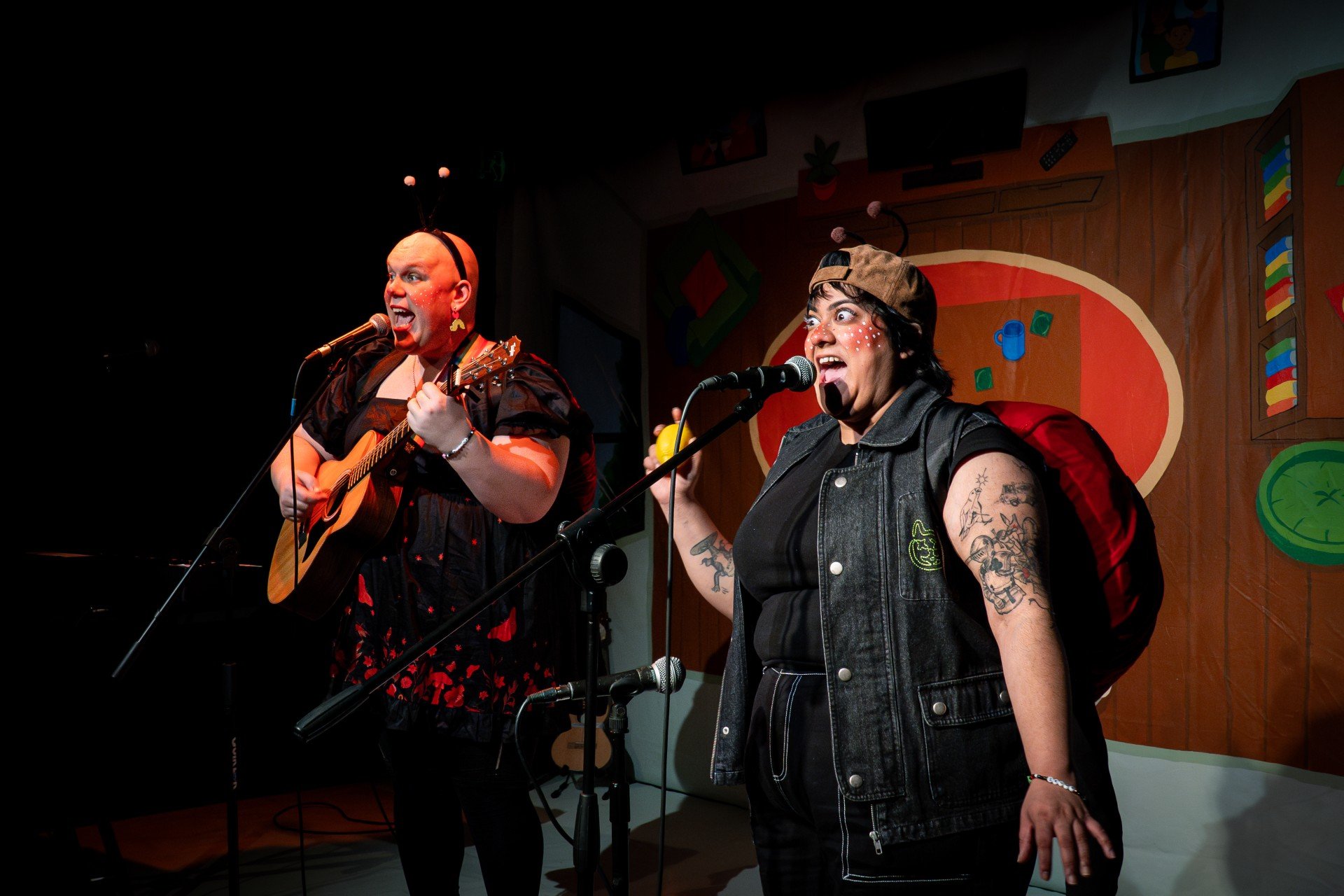
Photo credit: Afrina Razi
The performers, Kelly as Bauble and Caldeiro as Skump, carry the show with infectious enthusiasm. Their chemistry is immediate. They bounce off each other with quick banter, affectionate teasing, and a shared sense of mischief. Both performers switch between instruments with ease, moving from keyboard to guitar to bass to ukulele without losing momentum. Their voices blend beautifully, and their comedic timing is sharp. The songs are filled with puns, clever turns of phrase, and unexpected emotional beats. It is clear that the writing and composition have been crafted with care.
The setlist is extensive, covering everything from existential bug questions to heartfelt reflections on community. Songs like Questions for Humans and Bugs Find a Way show the duo’s ability to balance humour with sincerity. Praying Mantis Wedding leans into absurdity and violence, while Only Ladybug in the Room offers a surprisingly tender moment. The show is not simply a collection of bug-themed jokes. It is a full mythology. Bauble and Skump sing about their early lives, their friendships, their transformations, and the strange rituals of bug culture. They reference bug scripture, bug history, and bug celebrity lore. The world-building is thorough and imaginative, giving the audience a sense that these characters have lived entire lives before stepping onto the Living Room Wall.
One of the show’s greatest strengths is its audience engagement. Many small musicals rely on the front row for interaction, but Bug Songs Not Love Songs makes a point of involving everyone. Bauble and Skump speak directly to people in the middle rows and the back. They ask questions, encourage responses, and invite the audience to sing along. The tone is friendly rather than confrontational. The performers create a space where participation feels natural rather than forced. Humans are welcomed into the bug world, not mocked for being outsiders.
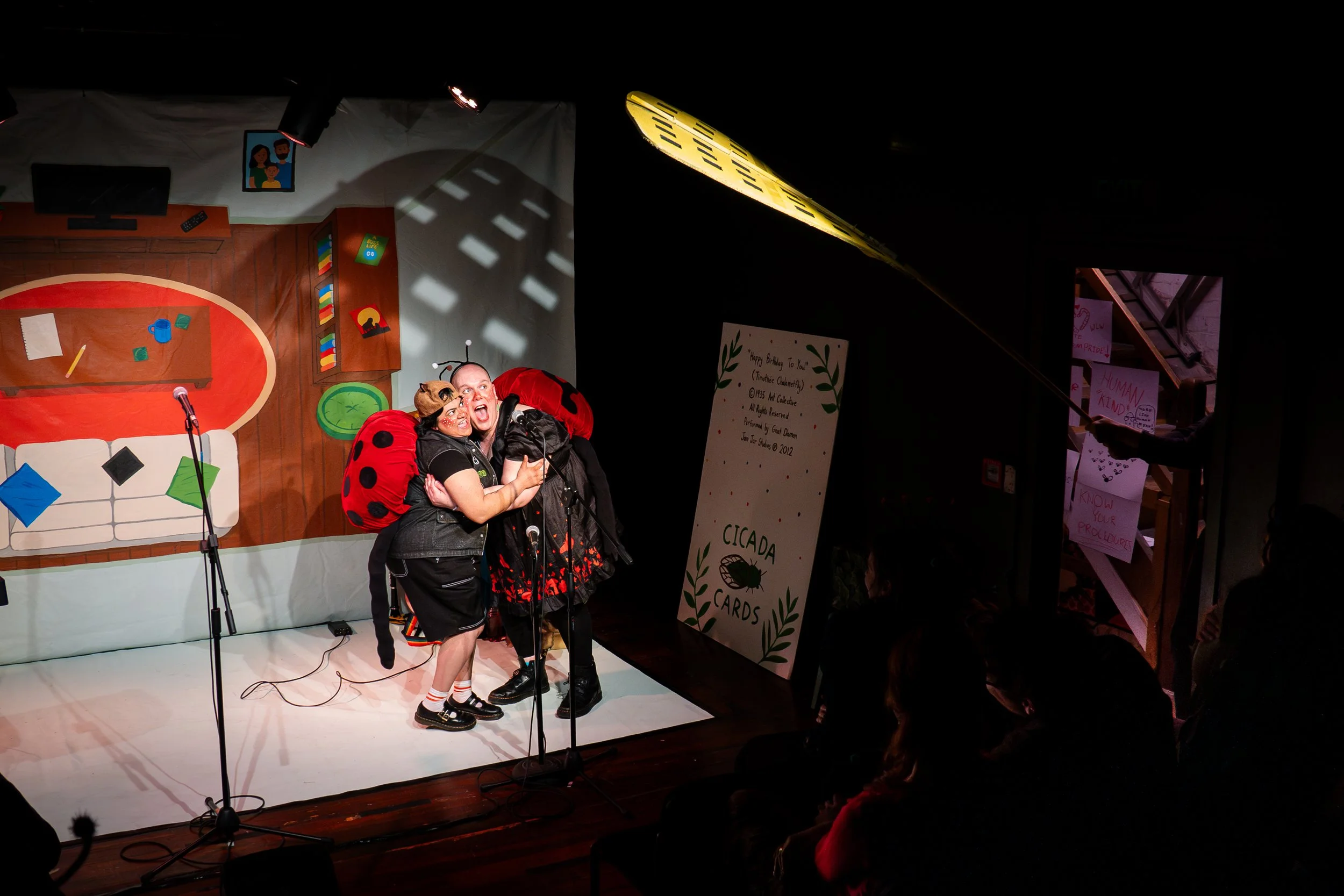
Photo credit: Afrina Razi
The humour is playful and accessible. There is miscommunication, misdirection, and plenty of bug-related wordplay. The performers lean into physical comedy, using exaggerated movements and expressive faces to bring the characters to life. The show never feels mean-spirited. Instead, it radiates warmth. Even when the jokes are silly, they are delivered with sincerity. The audience is invited to laugh with the bugs, not at them.
Director Alayne Dick brings cohesion to the chaos. The pacing is tight, the transitions are smooth, and the tone remains consistent throughout. Dick’s direction ensures that the show never becomes too frantic or too sentimental. The balance between comedy and heart is maintained with care. The voice of Rachel, provided by Dick, adds an additional layer to the world, expanding the narrative beyond the two performers onstage.
The technical elements are handled with precision. Jack McGee operates the tech as Moth, adding another character to the bug universe. The lighting shifts support emotional beats. The sound cues enhance comedic timing. The props are integrated into the performance rather than simply decorating the stage. Everything feels intentional.
The show’s message is gentle but meaningful. Caldeiro and Kelly have spoken about wanting to create work for people who do not often see themselves represented onstage. That intention is woven throughout the performance. Beneath the humour and the bug mythology is a story about community, resilience, and finding joy in difficult times. The show acknowledges that life is hard right now, but it also celebrates the small moments of connection that make things bearable. It encourages the audience to think about the people who uplift them and the people they uplift in return.
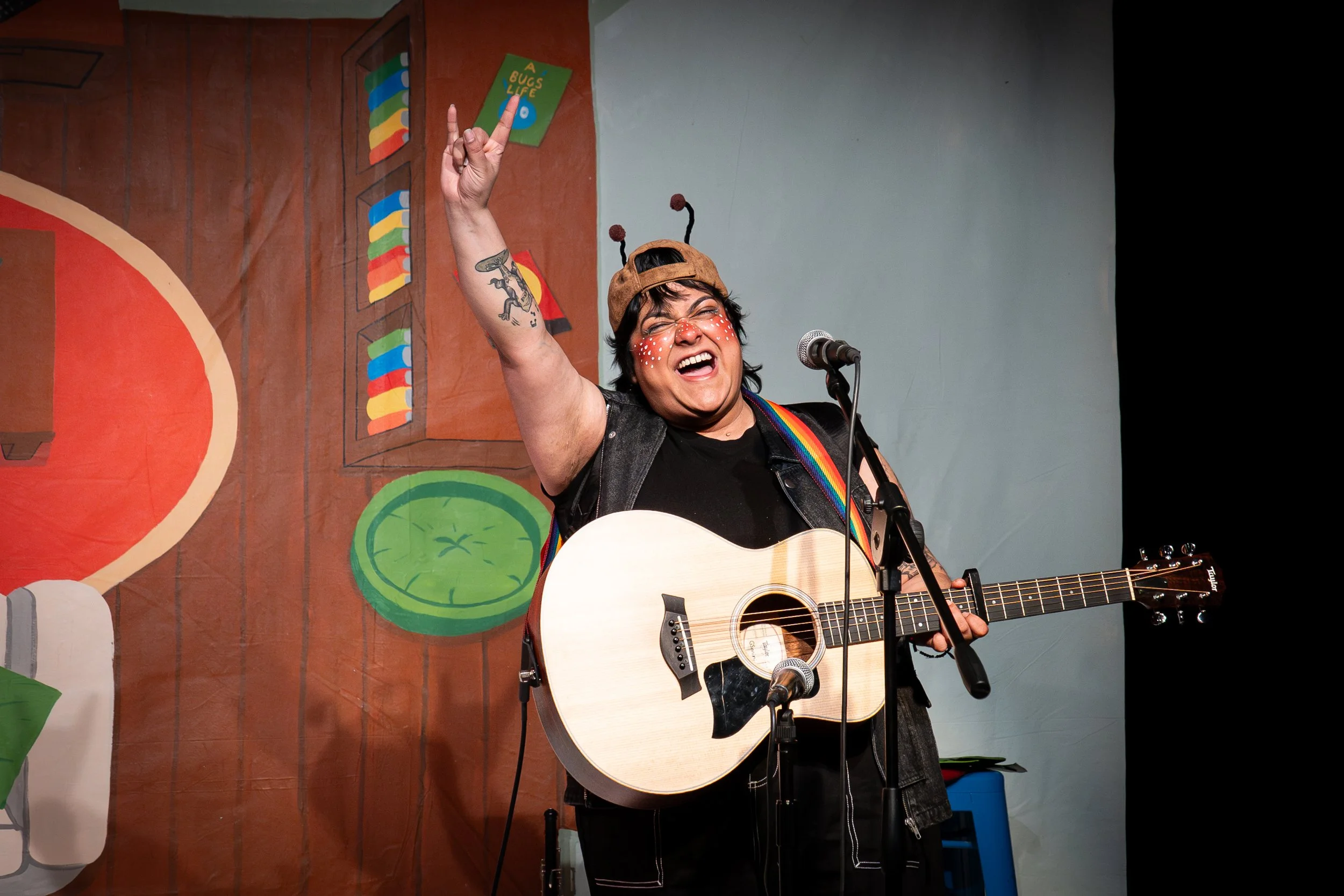
Photo credit: Afrina Razi
There are moments where the show’s ambition slightly outpaces its clarity. The mythology is dense, and some references may fly past audience members who are not fully tuned into the bug world. A few jokes rely on niche bug knowledge or specific cultural references. However, these moments are minor and do not detract from the overall experience. The performers’ charm and commitment carry the audience through any confusion.
What stands out most is the sheer effort behind the production. Every element, from the costumes to the props to the musical arrangements, shows care and creativity. It is rare to see a debut show arrive with such a fully realised identity. Bug Songs Not Love Songs feels like the beginning of a larger artistic journey for Bugs On A Wall. It is clear that Caldeiro and Kelly have a distinct voice, a strong collaborative dynamic, and a desire to create work that is both joyful and meaningful.
The show is cute, funny, and unexpectedly moving. It is a celebration of creativity, community, and the strange beauty of small things. It is the kind of performance that leaves you smiling long after you leave the theatre. On a Tuesday night at Basement Theatre, it is a delightful surprise.
Performances run from 1-5 September at Auckland’s Basement Theatre. Purchase tickets here.
Review written by Alex Moulton
