Oceania's Eleven
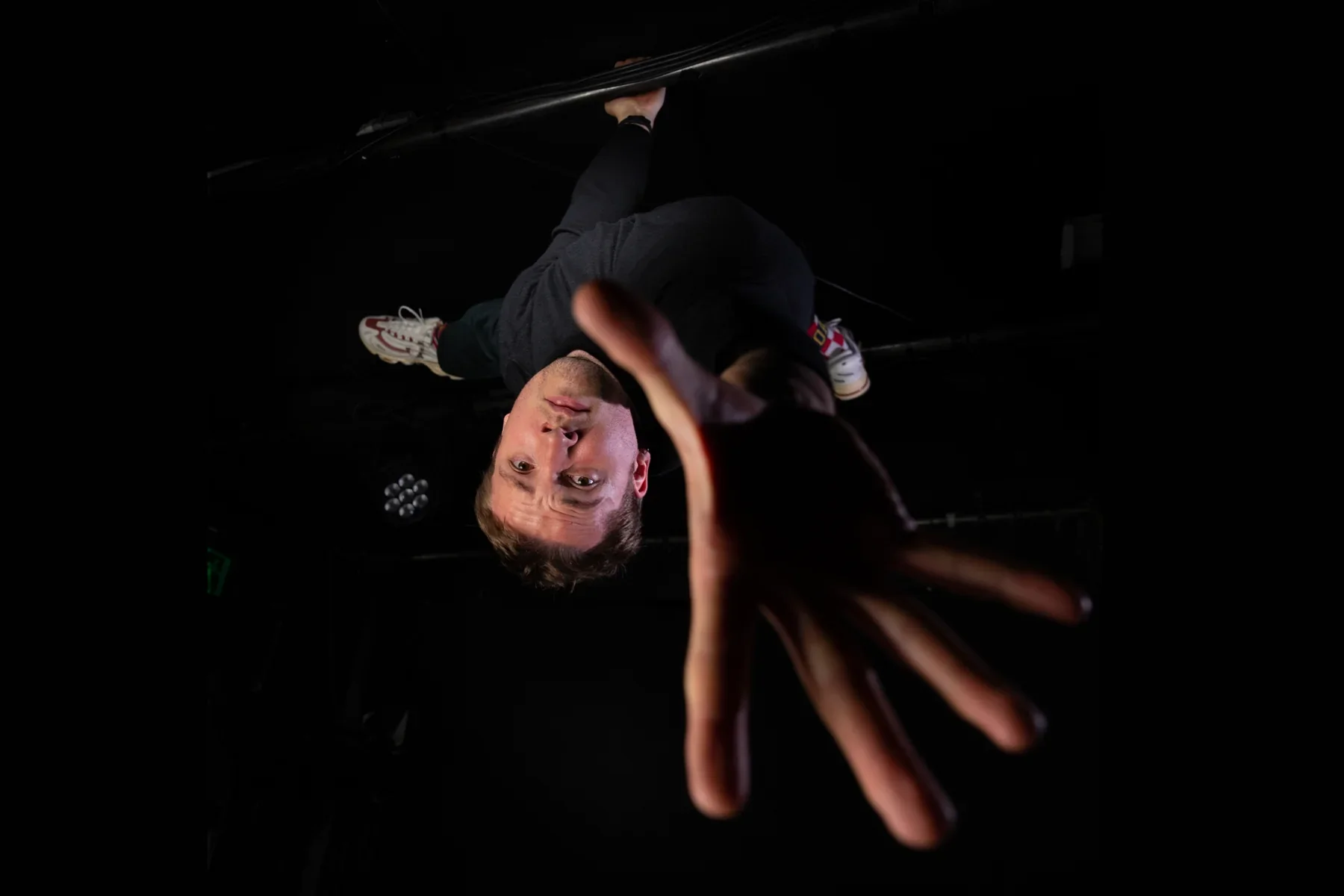
Eleven criminals. Eleven egos. All burned by the system, all back for one last score, and all performed by one human man: Every scheming thief, every sound effect, every action sequence, every piece of exposition, all in the hands of Vincent Andrew-Scammell, and Vincent Andrew-Scammell alone.
Oceania’s Eleven is the kind of theatre experiment that sounds impossible on paper and somehow feels inevitable once you see it in motion. A full heist narrative, eleven criminals, dozens of side characters, and an entire soundscape of action sequences, all performed by one man. Vincent Andrew-Scammell does not just carry the show. He is the show. Every voice, every footstep, every explosion, every helicopter rotor, every musical sting, every comedic beat, every shift in tone. It is a one‑performer spectacle that leans into chaos, precision, and sheer audacity, and the result is one of the most distinctive pieces of theatre to hit the stage this year.
The premise is simple. The execution is anything but. Oceania’s Eleven compresses the scale of classic heist films into a tight fifty‑five-minute performance, but the density of detail makes it feel much larger. Vincent plays eleven criminals, each with their own personality, accent, posture, and rhythm. Dax the mastermind, Socket the wrangler, JJ the conman, Clay the inside man, Jerky the driver, Soft Ware the computer guy, Hard Ware the demo man, Gobe the human statue, and a long list of supporting characters who appear just long enough to add texture before vanishing into the next twist. The cast list alone is a joke, but the commitment behind it is serious.
The set design is almost aggressively minimal. A single black curtain. No props. No furniture. No physical world beyond what Vincent can conjure with his body and the lighting. This simplicity becomes a strength. It forces the audience to focus on the performance, the sound, and the choreography of movement. The curtain becomes a portal, a hiding place, a transition point, and a comedic device. Vincent ducks in and out of it with the speed of a cartoon character, shifting personas in seconds, sometimes mid‑sentence.
The sound design is the show’s secret weapon. Vincent pre‑records hundreds of effects using only his voice, creating a soundscape that is both absurd and astonishing. Footsteps, grappling hooks, adhesive charges, espionage music, car engines, gunfire, and entire sequences of environmental noise are built from vocal performance alone. The precision is remarkable. Each sound is triggered in a strict sequence, creating a step‑by‑step audio script that ensures nothing is missed. It is meticulous, controlled, and deeply funny. The audience quickly realises that half the joke is the sheer commitment required to make this work.
The lighting design supports the worldbuilding with surprising nuance. It separates indoor and outdoor spaces, marks transitions, illustrates fire, snow, gunfire, and even comedic side notes. The lighting becomes a character in its own right, guiding the audience through scenes that would otherwise be impossible to stage with a single performer. It is a reminder that minimalism does not mean lack of craft. It means every element must work harder.
The narrative begins with the familiar beats of a heist story. A team is assembled. A plan is formed. A target is chosen. But Oceania’s Eleven does not stay in that lane for long. The plot becomes increasingly tangled, shifting into stranger and more chaotic territory as the show progresses. Twists pile on top of twists. Motivations shift. The story folds in on itself. The complexity is part of the joke, but it is also part of the charm. Vincent leans into the absurdity of trying to tell a sprawling heist narrative alone, and the show becomes a commentary on the genre itself.
The characters are distinct enough that the audience never loses track of who is speaking. Vincent uses posture, gesture, accent, and tempo to differentiate each criminal. Dax is sharp and controlled. JJ is slippery and theatrical. Jerky is frantic (and hilarious). Soft Ware is quiet and jittery. Hard Ware is blunt. Gobe is silent but large. The physicality is impressive, especially given the speed at which Vincent switches between roles. It is a performance that demands stamina, precision, and a willingness to embrace chaos.
The comedic timing is excellent. Vincent is comfortable with improvisation, and small mistakes become part of the humour. Forgetting the order of the cast list becomes a joke. Needing to rehydrate becomes a running gag. His own sweat becomes a practical effect. The show is full of moments where the performance threatens to derail, only for Vincent to fold the derailment into the narrative. It is a rare skill, and it keeps the audience engaged even when the pace becomes overwhelming.
The political edge of the show is subtle but present. References to coalition governments, arts funding, and the bombing of the Rainbow Warrior appear throughout the narrative, adding texture without overshadowing the heist. The commentary is sharp but playful, woven into the story rather than delivered as a lecture. The show is distinctly Kiwi, both in its humour and its cultural references, and that specificity gives it personality.
The pacing is intentionally intense. The show starts slow, building the world and introducing the characters, but accelerates rapidly as the plot becomes more complicated. The overwhelming nature of the performance is part of the design. It mirrors the chaos of a heist gone wrong, the frantic energy of criminals scrambling to stay ahead of disaster. The audience is meant to feel breathless. It is a feature, not a flaw.
There are moments where the show introduces ideas or characters that are not fully explored. These additions, combined with performing multiple characters pretending to be other people, act as red herrings, creating misdirection and adding to the sense of unpredictability. While some viewers may wish for more resolution, the lack of closure fits the tone. Oceania’s Eleven is not a tidy story. It is a chaotic one, and the unanswered questions contribute to the sense of theatrical mayhem.
Ultimately, Oceania’s Eleven is a showcase of craft, creativity, and sheer performance stamina. Vincent Andrew-Scammell delivers a one‑man spectacle that feels larger than its runtime and more ambitious than its minimalist staging suggests. It is funny, frantic, and full of personality. It is a celebration of theatre as an art form that thrives on imagination rather than resources. It is also a reminder of how much can be achieved when a performer commits fully to an idea, no matter how impossible it seems. It’s hella ambitious.
The season of Oceania’s Eleven runs from 15 - 19 September, at Auckland’s Basement Theatre. Purchase tickets here.
Review written by Alex Moulton
