Love of Your Life follows Maya, whose chance encounter with Charlie sets in motion a sweeping romance and a future beyond what she imagined. When that future is upended, Maya is sent hurtling toward an unexpected new life-one that will force her to reckon with who she is, what she wants, and how to love again.
Love of Your Life presents itself as a romantic drama, but Rachel Morrison's film is ultimately far more interested in what happens after love than the relationship itself. What begins as an engaging story of unexpected connection soon evolves into a decades-spanning examination of grief, identity and recovery, following Boston emergency room nurse Maya as she struggles to rebuild herself after a devastating loss reshapes the course of her life. While the film occasionally loses focus during its expansive emotional journey, it remains anchored by Margaret Qualley's deeply committed performance and Morrison's striking visual confidence behind the camera.
The opening act is easily the film's strongest. Maya's unexpected connection with Charlie is brought to life with a natural warmth that avoids many of the clichés commonly associated with cinematic romance. Rather than relying on grand declarations or manufactured drama, Morrison allows the relationship to develop through small interactions that establish a genuine sense of compatibility between two people who initially seem quite different from one another. The chemistry between Qualley and Gabriel Basso does much of the heavy lifting here, making it easy to invest in their relationship before the story inevitably shifts into much darker territory.
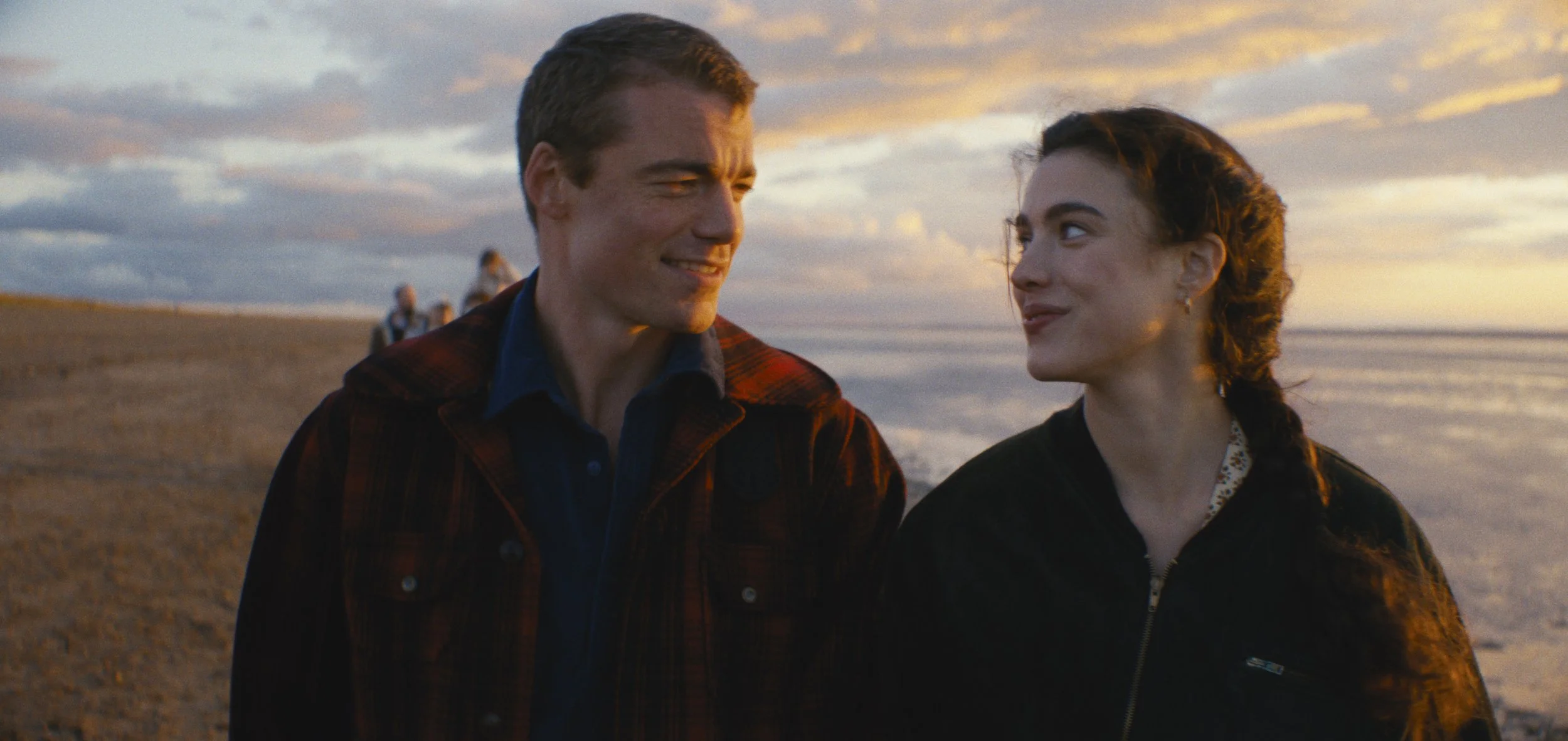
Once that shift occurs, Love of Your Life becomes a far more introspective experience, focusing on Maya's attempts to navigate the emotional fallout that follows. Rather than constructing a conventional narrative driven by external goals, the film embraces a slower and more reflective approach, allowing grief itself to become the central force shaping the story. Maya embarks on an extended journey across multiple countries in search of a version of herself that no longer feels defined by loss, but the film's interest lies less in the destinations themselves than in the emotional state she carries with her as she moves through them.
Qualley proves more than capable of carrying that burden. Her performance avoids exaggerated displays of suffering and instead captures grief as something quieter, messier and more difficult to articulate. She convincingly portrays Maya across several distinct stages of adulthood, communicating the emotional evolution of the character even when the screenplay leaves some of the transitional work undone. The challenge is that Maya often feels like a passive participant in her own story, spending much of the film reacting to circumstances rather than actively shaping them. While this passivity makes sense in the context of trauma, it occasionally creates distance between the character and the audience, particularly when she chooses avoidance over confrontation. Even so, Qualley consistently finds enough humanity within Maya to keep her sympathetic.
The screenplay's most significant weakness comes from its treatment of time. Major jumps occur throughout the narrative, transporting viewers between different periods of Maya's life while skipping over many of the experiences that would help explain her emotional transformation. The audience understands who she is at each stage, but not always how she arrived there. As a result, some of the character development feels compressed or implied rather than fully explored, creating the sense that important chapters have been left between the pages.
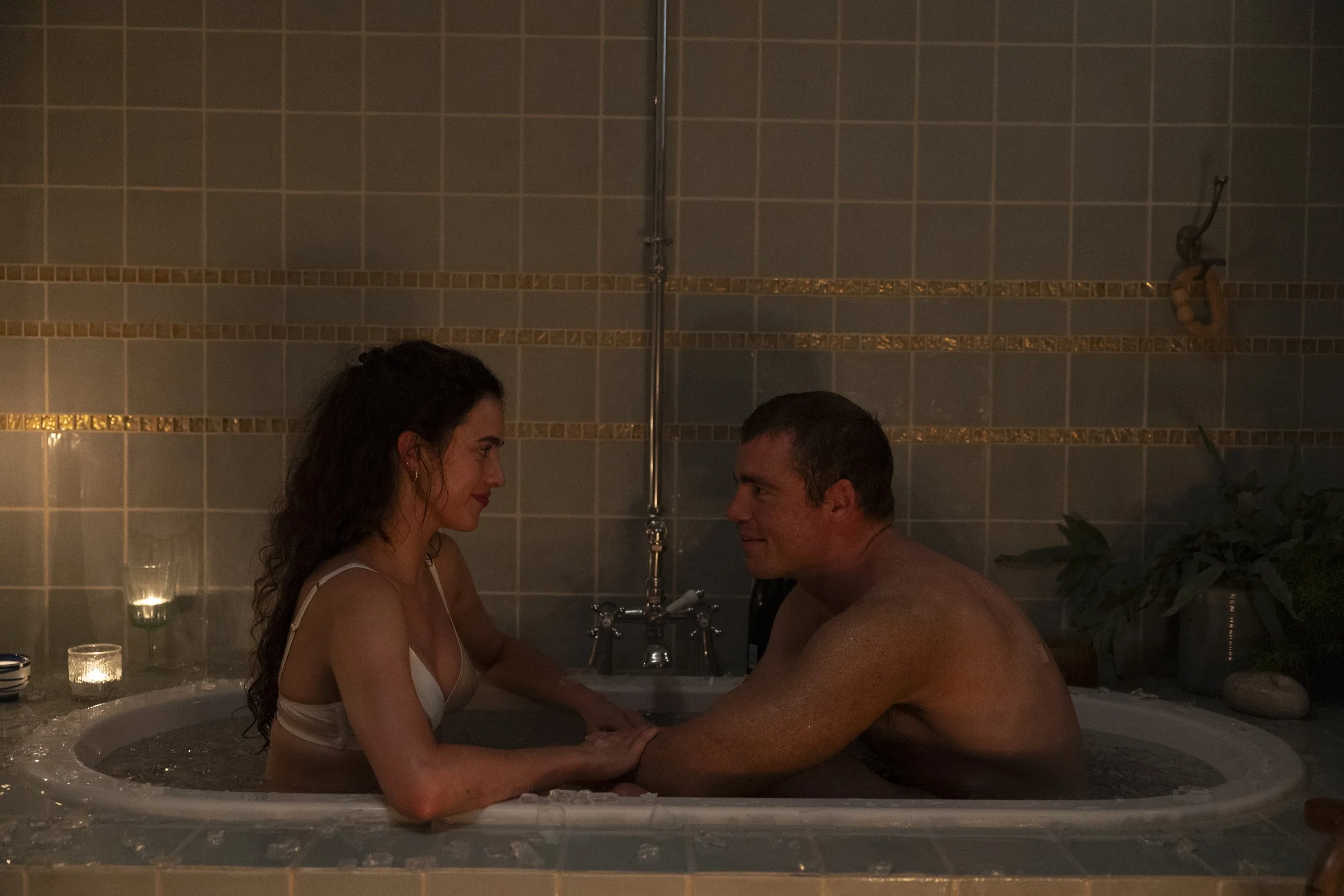
Fortunately, Morrison demonstrates a strong understanding of visual storytelling, using the film's imagery to fill some of those emotional gaps. Drawing upon her experience as an acclaimed cinematographer, she creates a distinct visual language for each chapter of Maya's life. The Boston sequences feel comparatively enclosed, with tighter framing reinforcing the pressure and confinement surrounding the character, while the later international chapters adopt wider compositions and embrace natural light in a way that suggests emotional possibility, even when Maya herself remains uncertain about the future. The decision to shoot entirely on location pays dividends throughout, with each city contributing a distinct atmosphere that feels integral to the story rather than functioning as mere backdrop.
At times, however, the film becomes slightly too captivated by its own beauty. The travel sequences are consistently gorgeous to look at, but there are moments when the emotional reality of Maya's experience seems secondary to the imagery itself. The result is a film that occasionally resembles an aspirational travel feature as much as a character drama, particularly when its depiction of healing appears disconnected from the practical realities surrounding grief. While the emotional intentions remain sincere, the polished presentation sometimes creates a layer of distance that prevents the film from reaching the emotional depth it is striving for.
Even when the narrative occasionally drifts, Morrison's technical craftsmanship remains impressive. Water becomes a recurring visual motif throughout the film, appearing in oceans, rivers, baths and rain-soaked environments that reflect Maya's constantly shifting emotional state. Combined with the film's tactile handheld camerawork, these choices create an intimate perspective that keeps viewers closely connected to the character's experience. The score complements this approach beautifully, beginning with restrained piano arrangements before gradually expanding into richer orchestral territory as Maya's world begins to open once again.

The film also benefits from several recurring thematic devices, particularly its use of an audio cassette that gains increasing significance as the story progresses. Without drawing unnecessary attention to itself, the motif reinforces the film's broader fascination with memory, the persistence of the past and the complicated ways people carry lost relationships into the future. These elements give the story a sense of cohesion that occasionally feels absent from the plot itself.
While Love of Your Life never develops a particularly strong narrative drive and sometimes allows its emotional wandering to become literal wandering, its warmth and sincerity make it difficult to dismiss. The film occasionally sacrifices momentum in favour of atmosphere and skips over important stages of character development, but it ultimately succeeds because it understands that healing is rarely straightforward. By the time Maya finally reaches a place where she can confront both her past and herself, the story achieves an emotional completeness that helps justify the winding road taken to get there. Supported by a career-best performance from Margaret Qualley and confident direction from Rachel Morrison, Love of Your Life delivers a thoughtful and often moving exploration of loss, resilience and the difficult process of learning how to move forward without forgetting what came before.
Love of Your Life is streaming globally on Prime Video on Wednesday 14 October.
Review written by Alex Moulton
