Photo credit: Brittany Harrison
Presented as part of the Day One Shorts Collection 2026, premiering via Show Me Shorts 2026
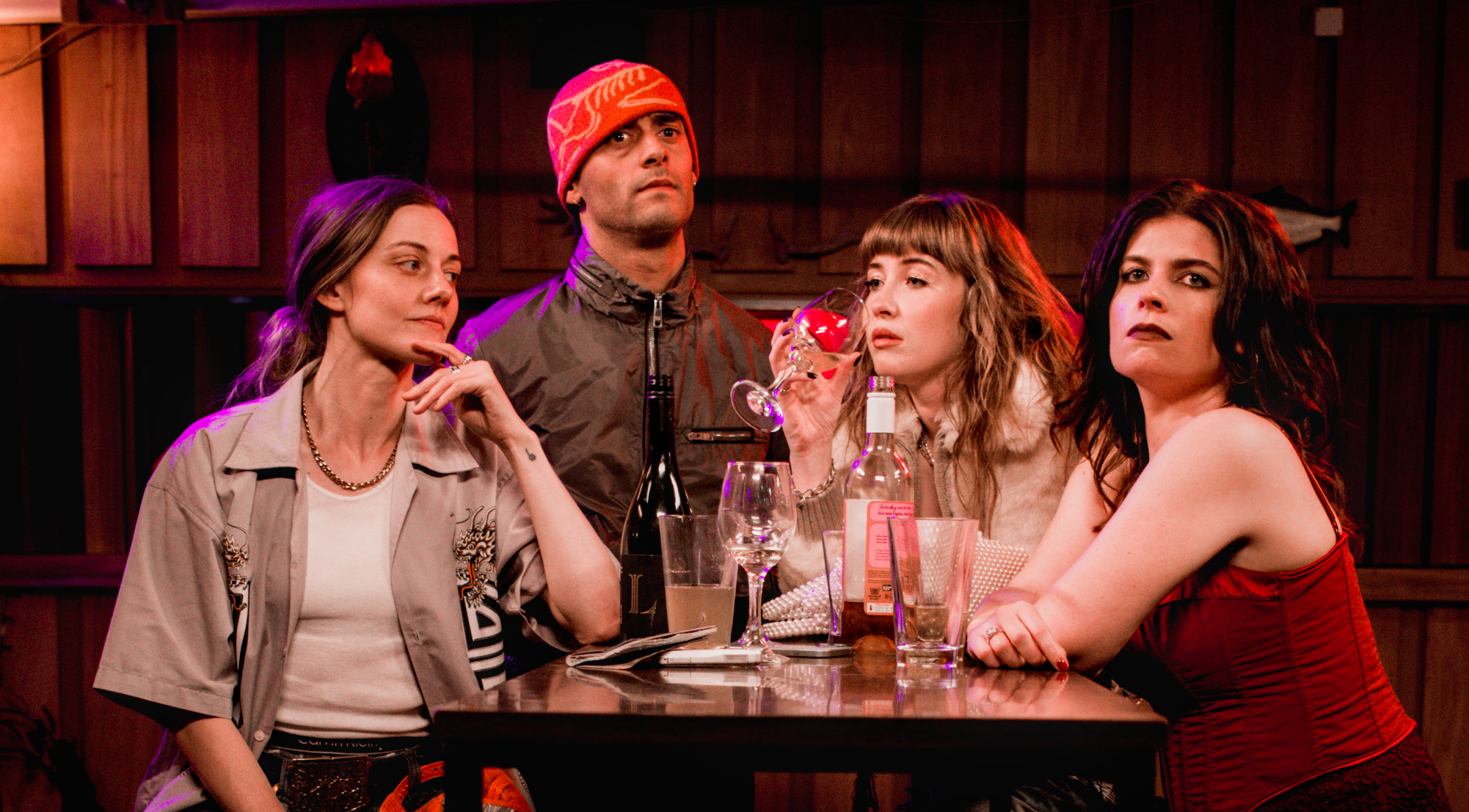
Two couples, now exes & once best friends. One night to hash over the past. What could go wrong?
Mutually Assured Destruction takes a familiar setup, a few exes gathering for what should be a relatively civil catch-up, and turns it into an entertaining emotional minefield where every conversation feels like it could detonate at any moment. Connor Amor-Bendall's short film thrives on sharp interpersonal conflict, transforming a simple evening of drinks into an increasingly volatile examination of friendship, resentment, and the dangerous power of secrets left buried for too long.
The title itself provides a clever indication of what lies ahead. Borrowing its name from the Cold War concept in which both sides possess the power to destroy one another, the film applies the same logic to relationships. In this case, the weapons are not nuclear arsenals but years of unresolved history, lingering hurt, and information that should probably have stayed hidden. Once those weapons begin to emerge, the gathering quickly shifts from an awkward reunion into an emotional battle where nobody is likely to walk away entirely unscathed.
What makes the film particularly effective is the speed at which it escalates. The opening creates a sense of familiarity and relative comfort, allowing viewers to settle into the social dynamics between the four central characters. There is an immediate sense of shared history, with conversations carrying the easy rhythms of people who have known one another for years. Yet beneath that apparent comfort lies a constant undercurrent of tension. The audience quickly becomes aware that these relationships are balancing on unstable foundations, and it is only a matter of time before something gives way.

Photo credit: Crystal Chen
Rather than relying on major external events, the film generates drama almost entirely through dialogue and performance. This is not a story driven by action but by reactions. Every statement carries weight, every pause feels loaded, and every glance across the room has the potential to alter the atmosphere. The script understands that the most devastating blows in a relationship are often delivered through words rather than actions, and it leans heavily into that reality.
The ensemble cast handles this challenge impressively. Because the story is built around shifting alliances, emotional confrontations, and uncomfortable revelations, performances are required to do much of the heavy lifting. The cast succeeds in creating believable relationships that feel lived-in rather than manufactured for plot convenience. Even when tensions rise and emotions begin spilling into the open, the interactions remain grounded in a sense of authenticity.
One of the film's greatest strengths is its ability to make a largely static setting feel dynamic. A single location conversation can easily become visually repetitive, but Amor-Bendall consistently finds ways to inject energy into the presentation. The camera rarely sits still for too long, and the film makes extensive use of intimate framing to maintain momentum.

Photo credit: Crystal Chen
Close-up shots become particularly important to the storytelling. The camera often pushes into faces at crucial moments, capturing tiny reactions that reveal far more than the dialogue itself. Micro-expressions, nervous glances, forced smiles, and flickers of discomfort become essential storytelling tools. As tensions continue to rise, these visual details help the audience track emotional shifts and unspoken conflicts unfolding beneath the surface.
This approach creates an intimacy that occasionally borders on uncomfortable, which feels entirely appropriate for the material. Viewers are not watching arguments from a safe distance. Instead, they are pulled directly into the emotional crossfire, positioned close enough to witness every moment of damage as it occurs. The result is a film that feels increasingly claustrophobic despite taking place in a relatively open social environment.
The editing plays a crucial role in sustaining this energy. Scenes move with a pace that mirrors the rapid-fire nature of the conversations themselves. Exchanges bounce quickly between characters, giving many sequences the feeling of verbal sparring matches where participants are constantly searching for an advantage. The rhythm creates momentum and helps maintain engagement even when the narrative remains focused on people simply talking.

Photo credit: Crystal Chen
There is also a distinctly theatrical quality to the setup, but the film avoids feeling stage-bound thanks to the confidence of its visual language. Strategic camera movement, careful framing, and energetic cutting ensure that the drama remains cinematic. The audience is constantly being directed toward new points of tension, preventing scenes from stagnating.
Visually, the film embraces the atmosphere of its bar setting very effectively. Warm lighting dominates the environment, creating a sense of comfort and familiarity on the surface. At the same time, subtle colour choices and lighting contrasts inject a current of unease beneath that warmth. The location feels inviting enough that these characters would naturally gather there, yet emotionally charged enough to become the ideal arena for conflict. It is a careful balance that complements the narrative well.
What ultimately elevates Mutually Assured Destruction above a simple relationship drama is the way it understands the destructive potential of truth. The narrative explores how certain secrets can become a form of leverage, and how the decision to reveal them often carries consequences far beyond the intended target. The film recognises that friendships and romantic relationships often exist within interconnected social ecosystems. When one relationship fractures, the damage can spread outward, affecting everyone nearby.

There is a particularly compelling examination of loyalty running through the story. Characters are repeatedly forced to navigate competing obligations between honesty, self-preservation, and protecting those they care about. These conflicts add complexity to the drama and ensure that no single character feels entirely right or entirely wrong. The film understands that interpersonal relationships are messy, and it embraces that messiness rather than simplifying it.
While the current version occasionally shows signs of being an early cut, particularly in some audio transitions and sound consistency between sequences, these issues feel technical rather than structural. The strength of the performances, writing, editing, and visual storytelling remains clear throughout, suggesting a very polished final product once those elements are refined.
In the end, Mutually Assured Destruction delivers exactly what its title promises. It is funny, tense, chaotic, and packed with emotional fallout. Through strong performances, confident direction, and a sharp understanding of how fragile human relationships can be, Connor Amor-Bendall transforms a simple gathering into an engrossing social battlefield. Watching these carefully constructed friendships unravel is often uncomfortable, occasionally hilarious, and consistently entertaining, making for a short film that proves some of the most explosive conflicts require nothing more than four people, one room, and a secret that should never have been brought up.
The film premiered at Show Me Shorts on Saturday 10 October, and is available to watch on dofilm.co.nz and YouTube from Monday 12 October.
Review written by Alex Moulton
Day One Hāpai te Haeata is a supportive community that provides rangatahi with the tools, guidance and opportunities to share stories on screen. Day One supports a series of funded short films made by young emerging filmmakers that explore cultural, social and political issues. This year, 8 films have been created under Day One’s guidance and programme.
